October 2024. Billinghay.
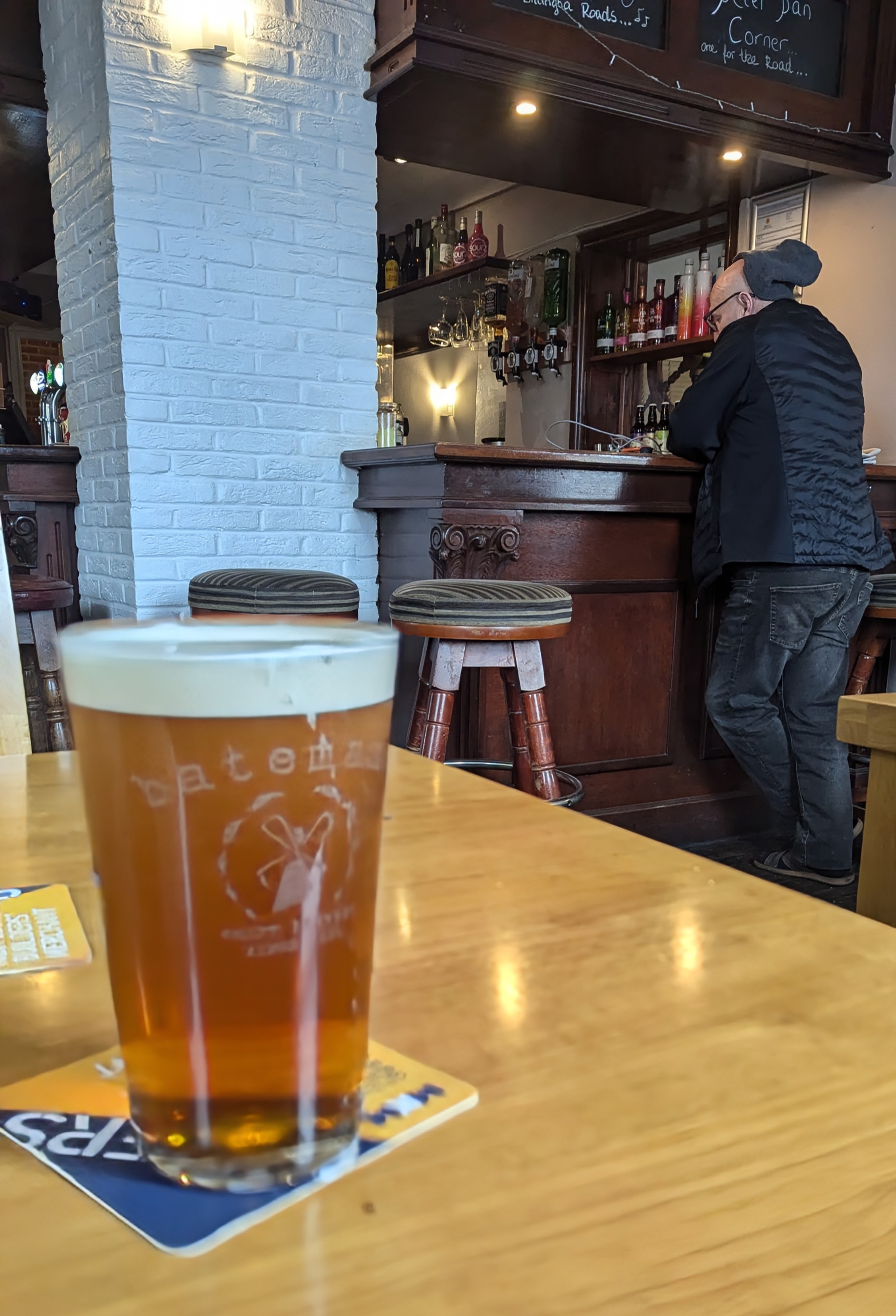
One of the joys of a new Good Beer Guide is finding out which remote Lincolnshire boozer with uncertain hours and a lone Bateman pump will require Simon to beg a lift from Daddy BRAPA this year.
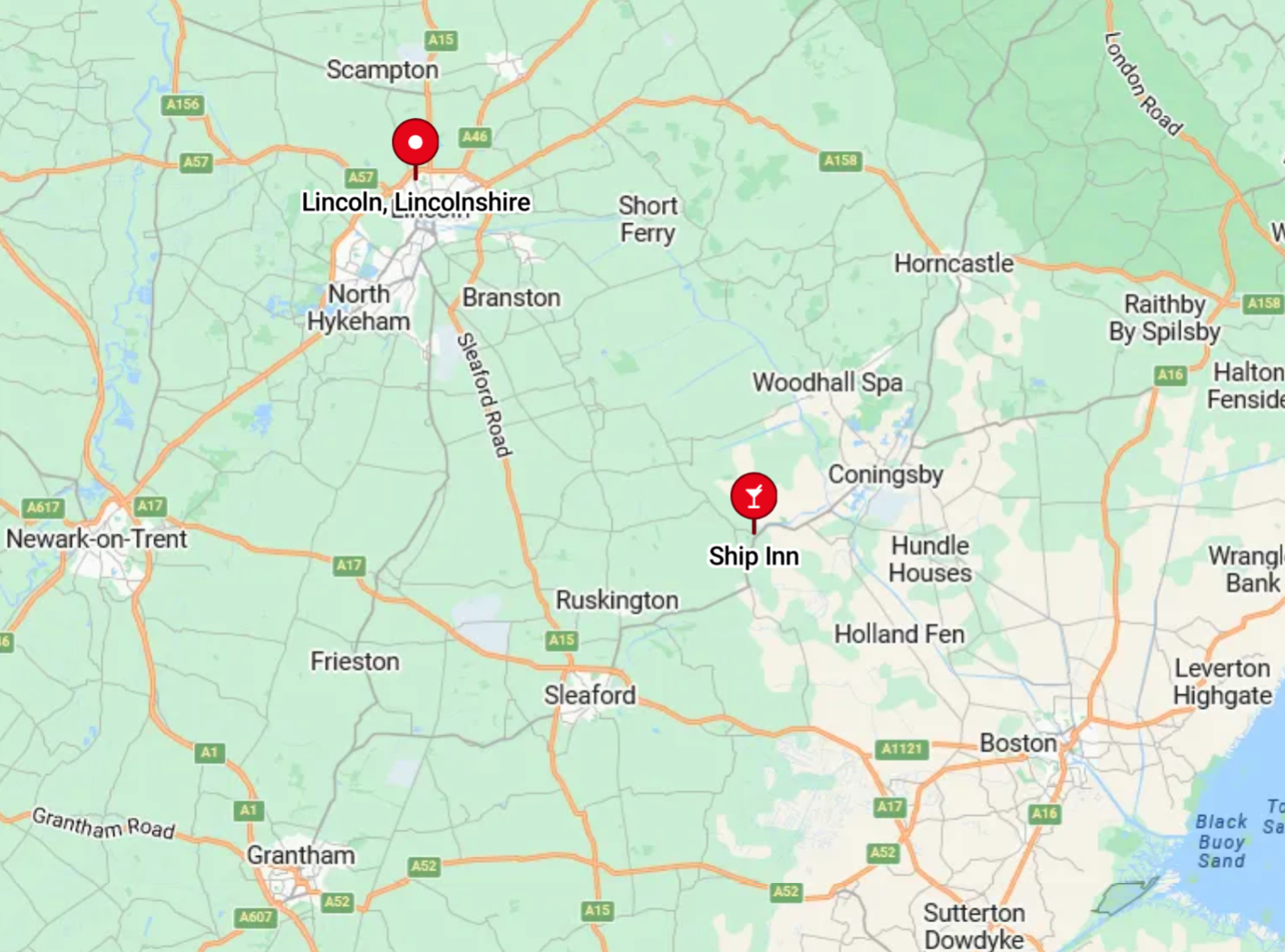
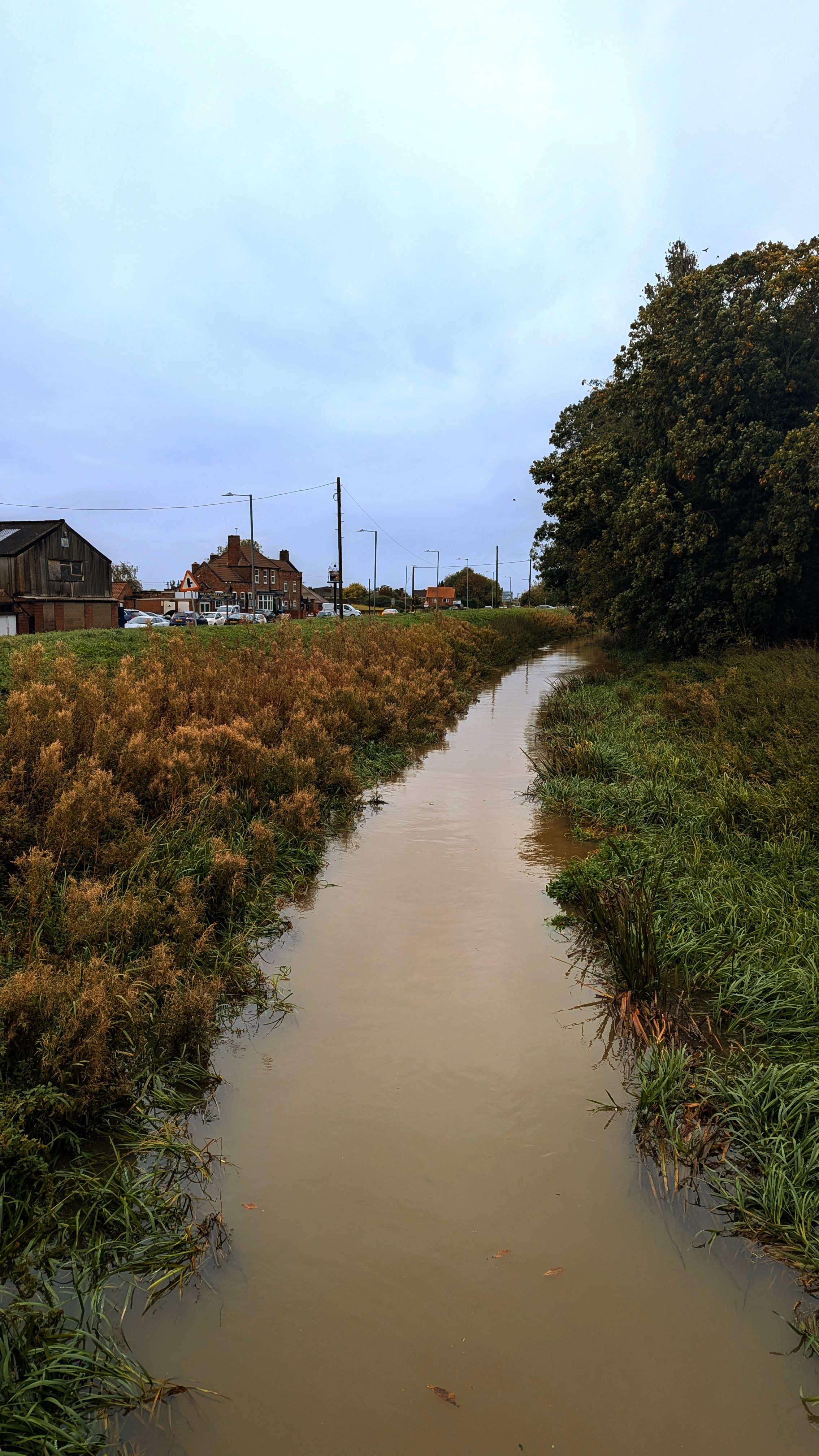
So, a big muddy welcome to Billinghay,
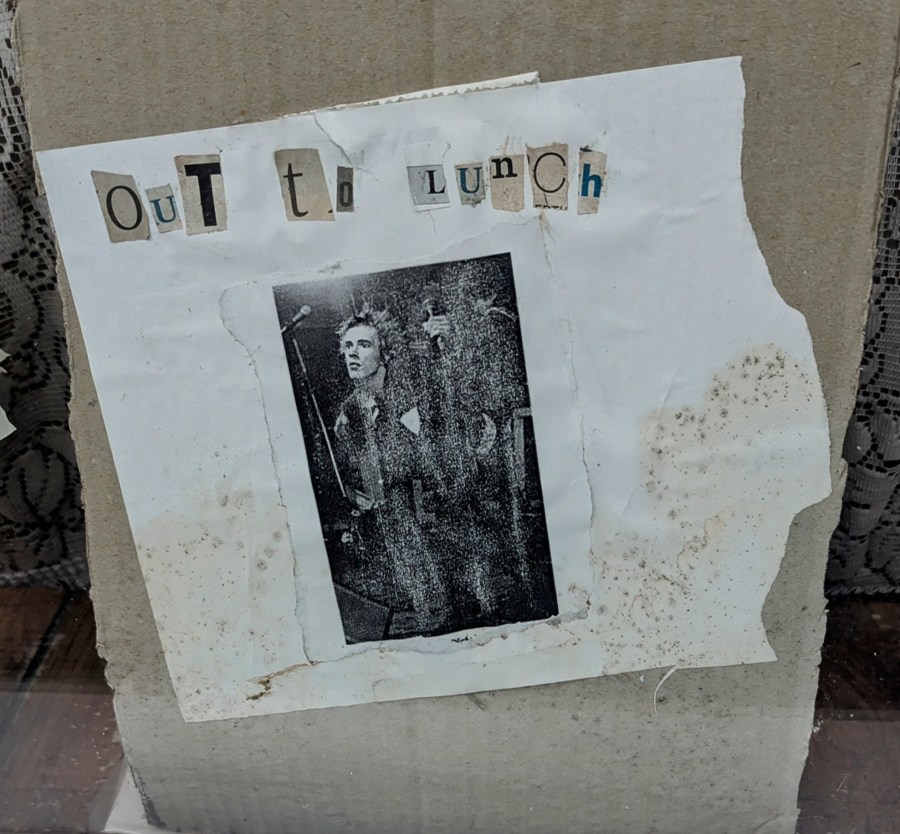
far enough away from the mods of Sleaford for comfort, and whose only musical reference is a nod to the punk craze that gripped North Kesteven between March 1977 and October 1977.
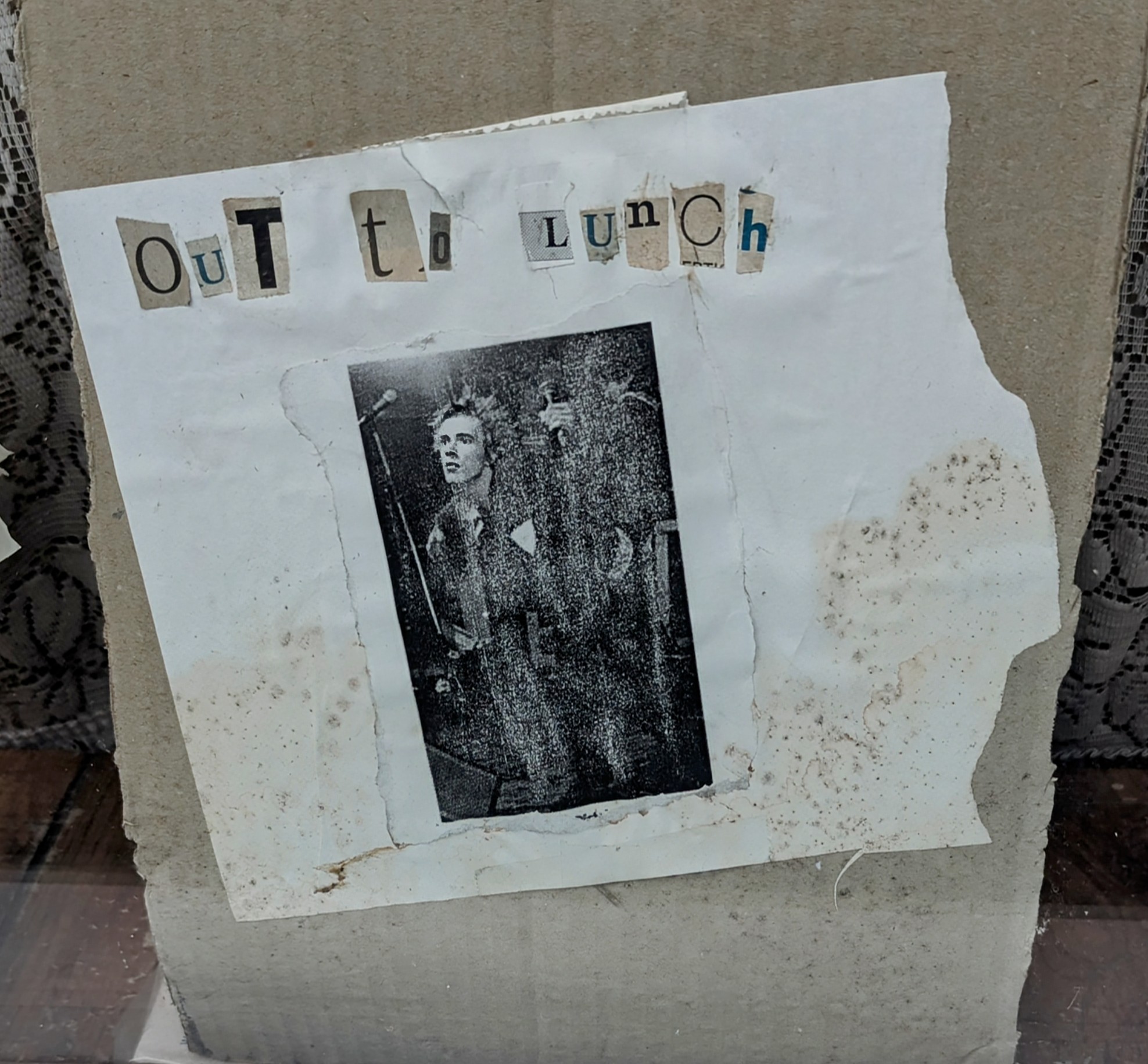
That pic is in the window of the strange pale green house on Victoria Street. Check it out on your visit.
Some tickers would nip in the Ship and head for the coast. I give you the Best of Billinghay.
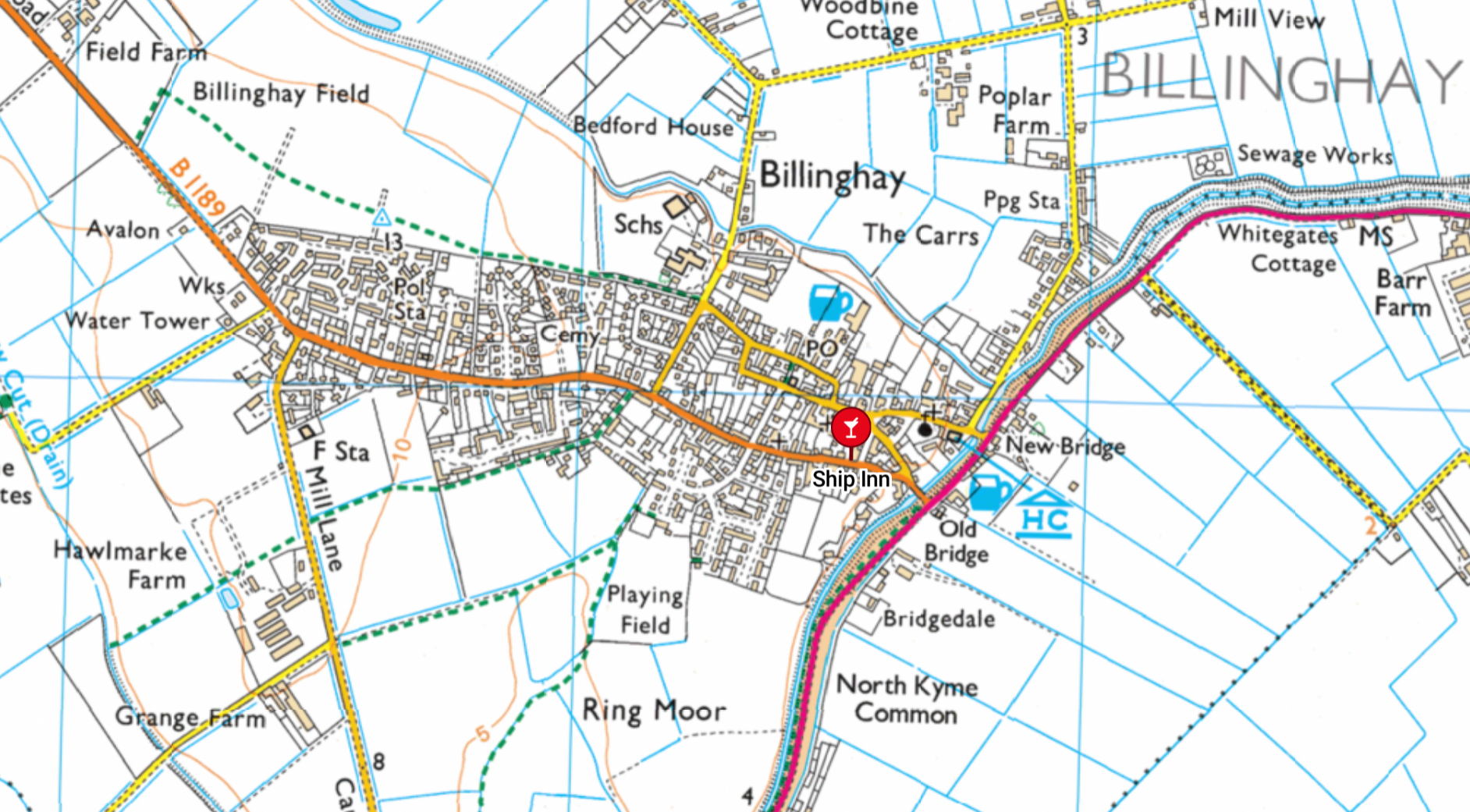
A mere 2,203 souls, but five takeaways if you count the mobile van, and a Co-op without self-service so you have to have a long conservation about vertigo (not the film) with the one member of staff at the till. Which is nice.
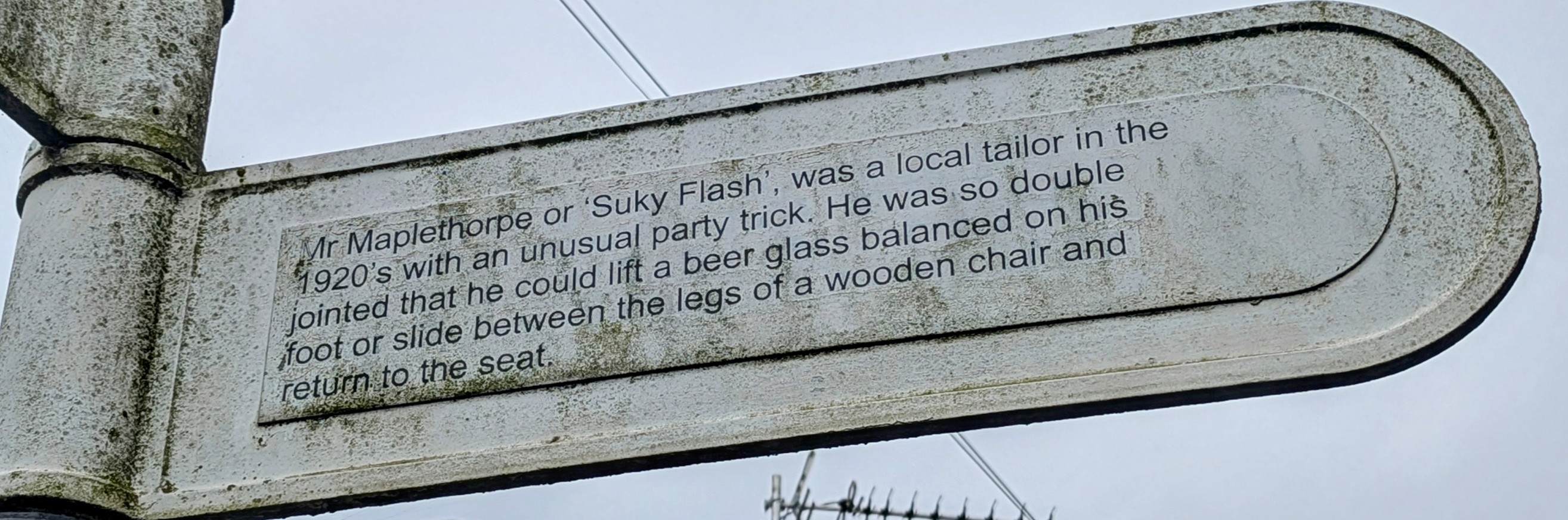
But the star attractions are the local heritage fingerposts dotted around the village, like this one celebrating “Suky Flash“, which sounds like a West Brom curry house.
And next to the finger posts is an actual cylindrical drum you spin around to get a short film showing a quirky feature of village life (Press PLAY below).
Yes, they’ve made an effort, or probably they did in Millennium year, and well worth an hour of your time,
if only wondering what the Billinghay Nibblers actually nibbled.
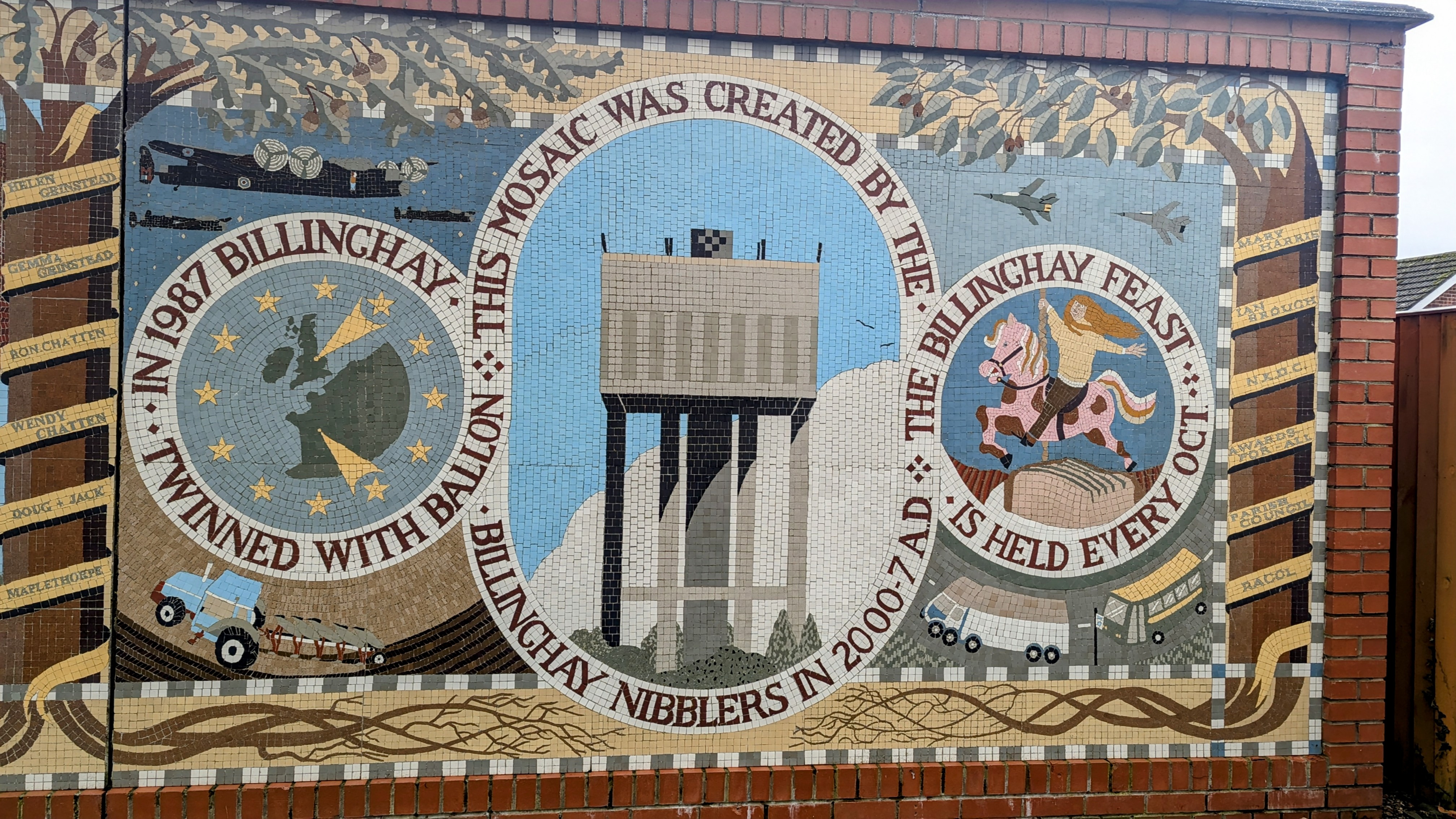
Housing is very South Lincs, quite a few bungalows and a house named “Dunfydlyn“, which, like the fishing town in “Under Milk Wood” should be read backwards.
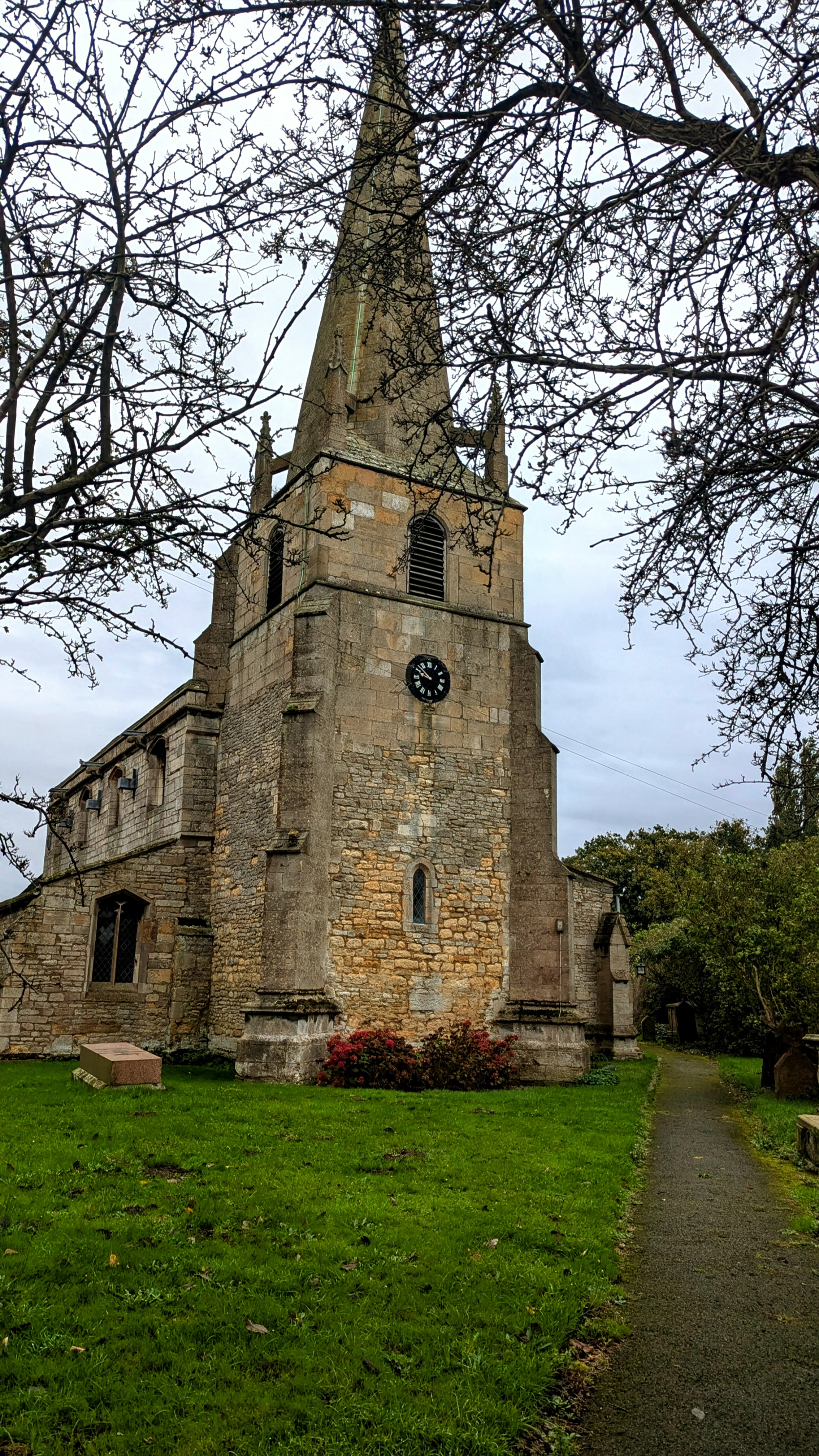
“Was THAT the old Heritage Centre ?” I ask a random lady standing by the church, pointing to the thatch.
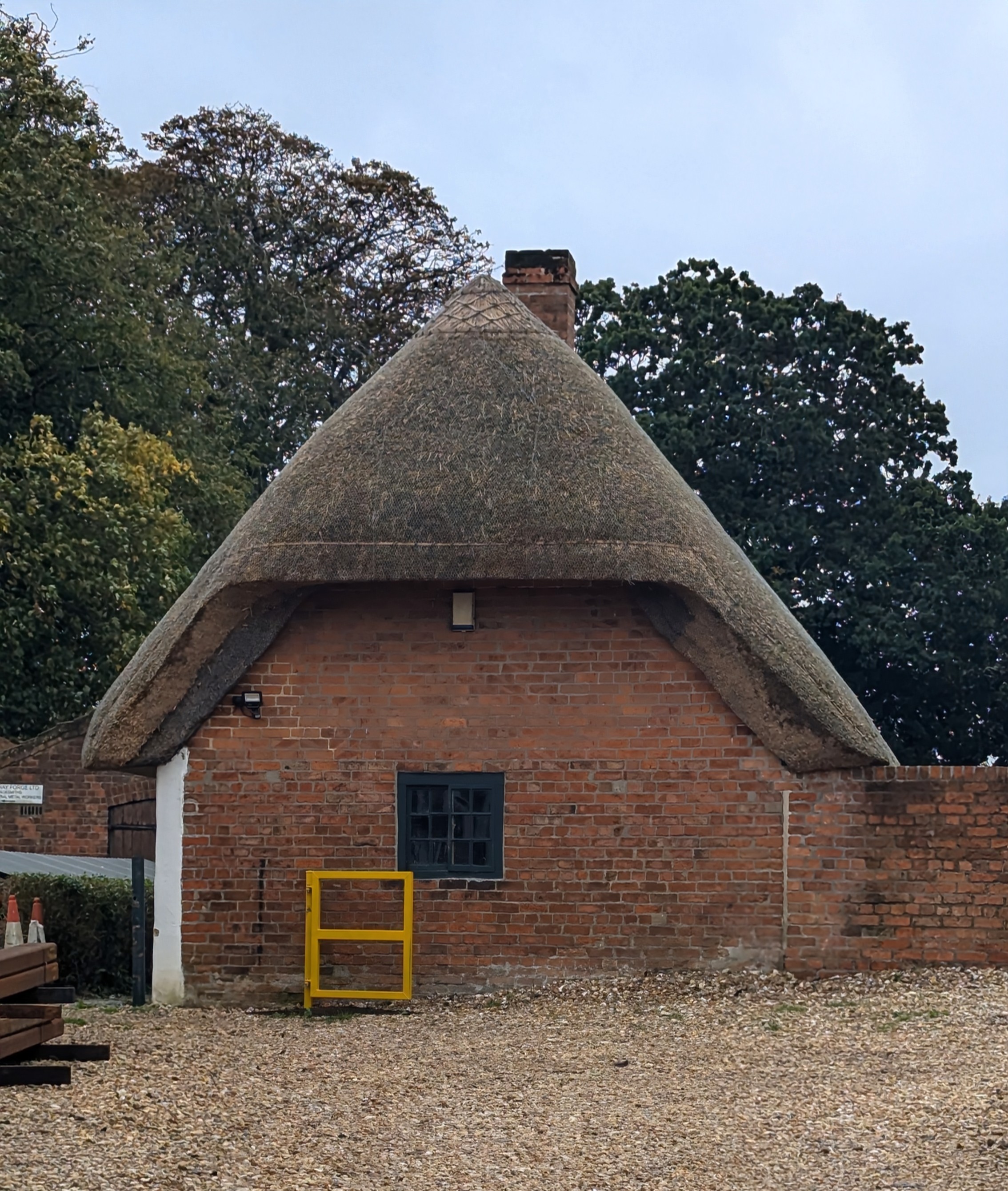
Sensing a trick question and a request for alms, she scuttles off to the Co-op for a chat with the cashier.
After so much excitement, the Ship could have been a let down,
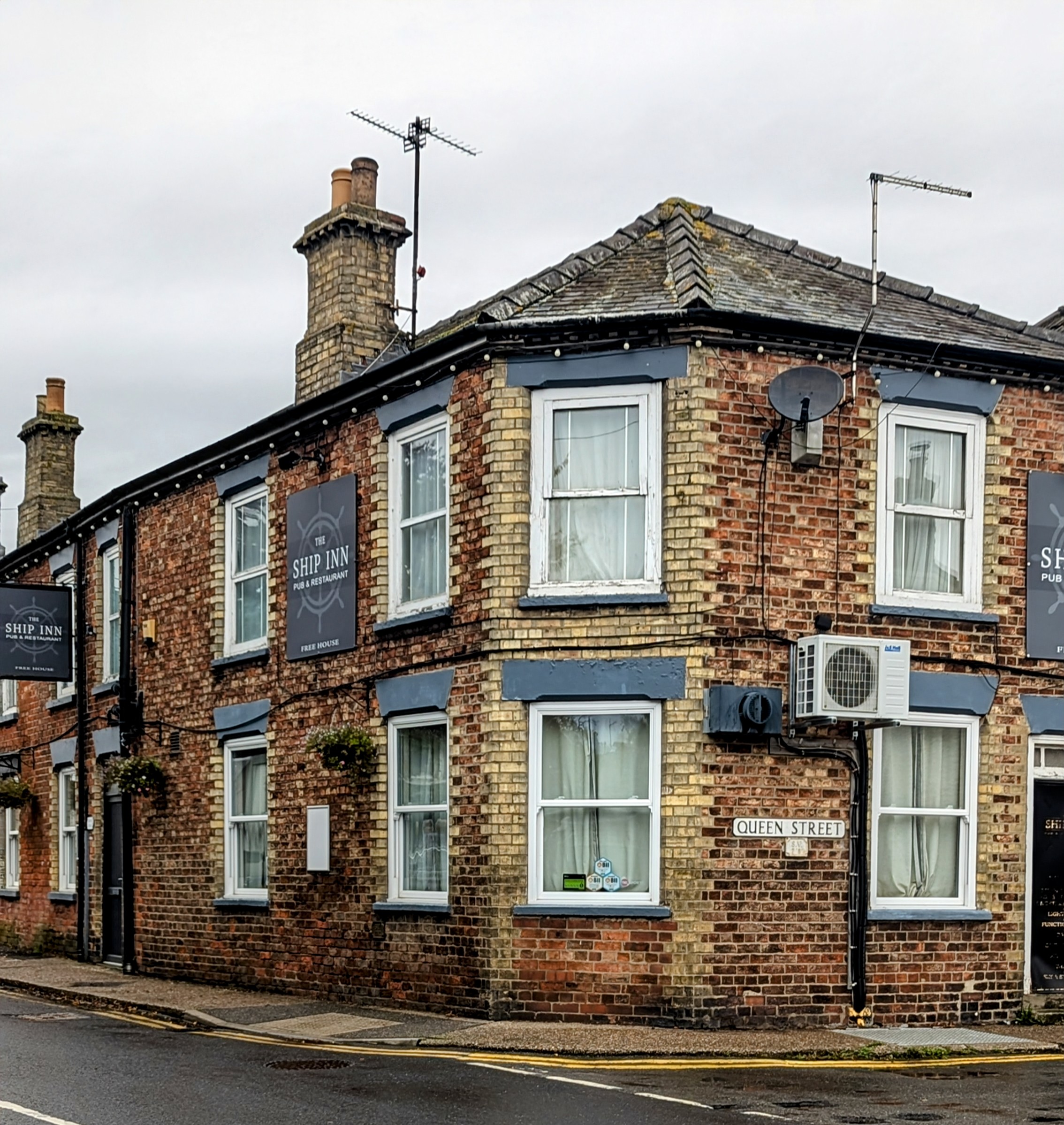
but from the greeting from Elton,
to the modernised but comfy seating,
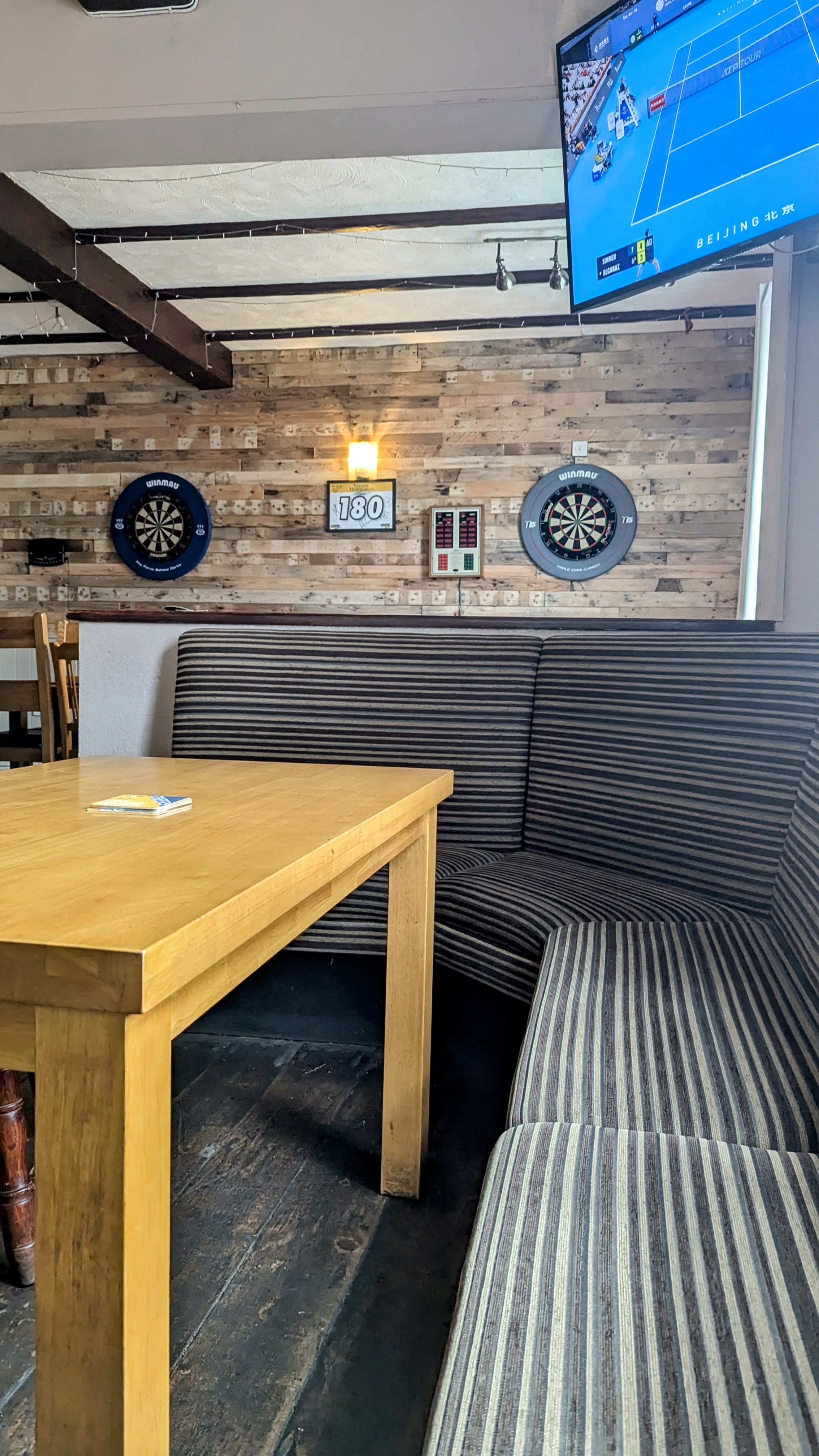
to the lone pump dispensing a cool (NBSS 3.5) XB under £4,
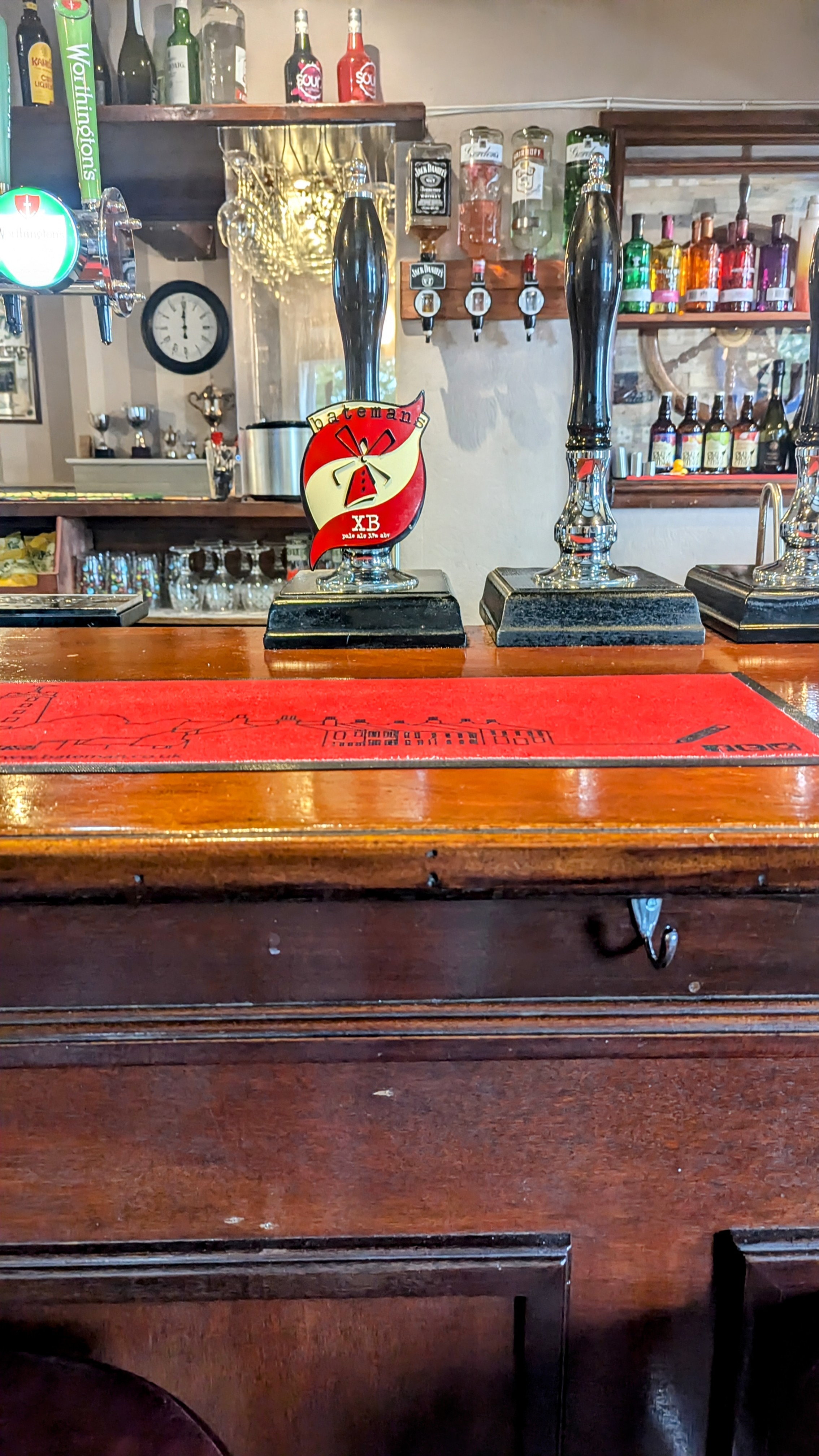
it feels as if it’s just what the village needs. One Old Boy, woolly hat, West Brom fan, slams his hand on the bar by way of greeting, two ladies turn up for a cheap lunch.
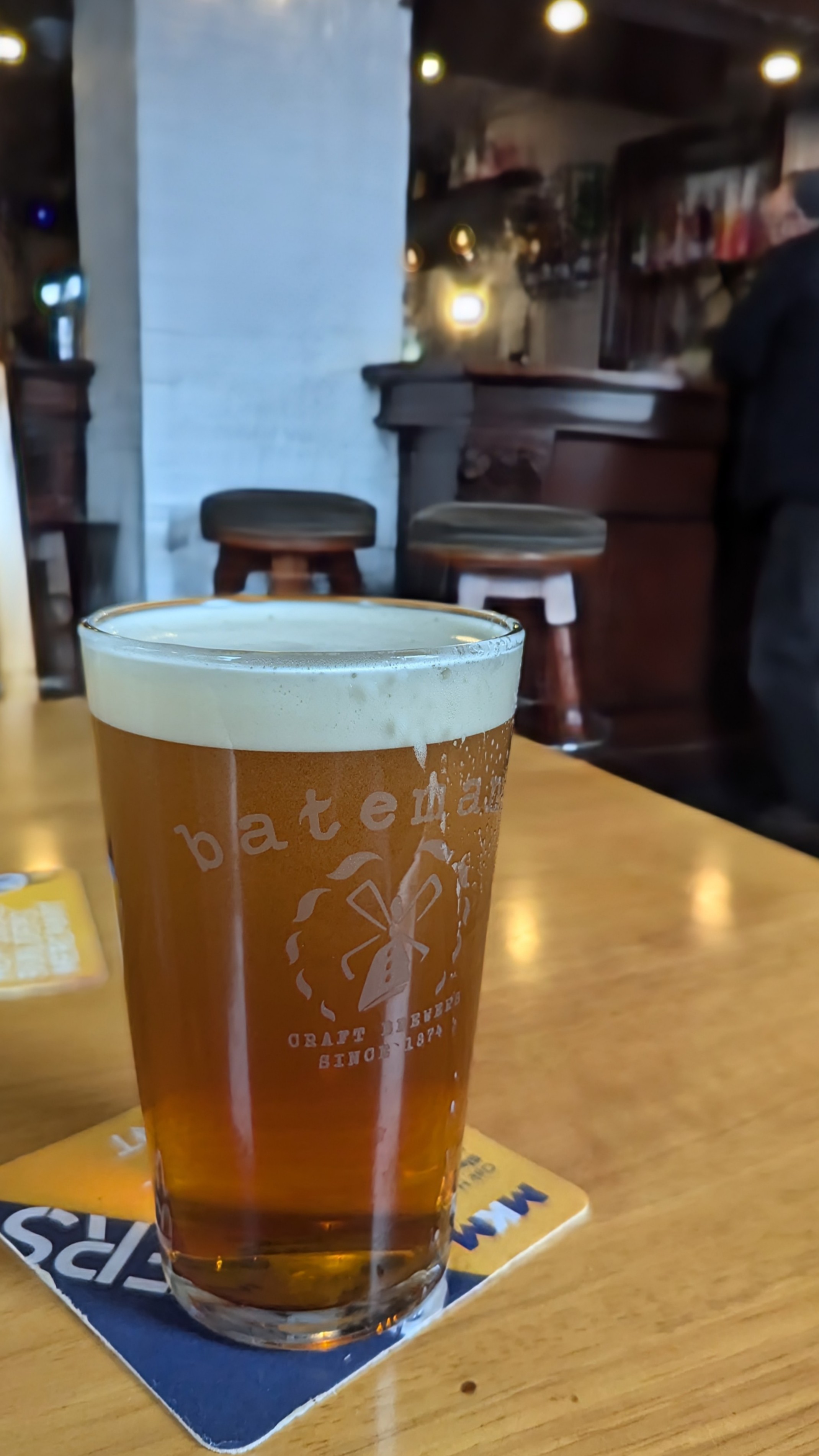
In years past us tickers have bemoaned the quality of some of these GBG newbies in unsung Lincs. But not the Ship.

 retiredmartin
Not a huge Elton fan, but the man could really crank out a rock anthem when he wanted to release one.
LikeLike
“Lincolnshire Life” (and Death it would seem) says this:-
“As well as ones dedicated to Mr Maplethorpe, Fred Gilbert and Nickel Bavin there is one called Walk Tall which tells of farmers walking through a flooded field on stilts to get into the village and then leaning the stilts up against the church wall, and a one-finger sign telling of Billinghay boys who used to ride around on the sails of the former post mill in Kyme Road.
It was an ideal fairground ride for them. The boys used to wait for a sail to swing round, jump on it and ride the whole circuit while clinging on for dear life”
LikeLiked by 1 person
All it needed was for the local toffs to use them as target practice as a change from clay pigeons to complete the rural idyll.
LikeLike
You’re confusing Lincolnshire with Rutland.
LikeLike
My late mum was from Rutland – Stamford that is – and there’s no arguing about that.
LikeLiked by 1 person
With reference to ‘Walk Tall’ do you know ‘What was inadequate causing the need for stilts?’ … the question is asked in a geocaching Adventure Lab puzzle and it has me stumped. Any help would be appreciated. Thanks.
LikeLike
The signage in the flooded fields indicating the depth of the ditches I assume, but there’s no doubt a more detailed explanation in the Tourist Information Centre of nearby Concreton.
LikeLike
Answer from ChatGPT…
That’s a great bit of local history from Billinghay — and it ties in nicely with the nature of the Fens.
A century or more ago, Billinghay sat in a much wetter landscape. Though now drained and largely agricultural, the Lincolnshire Fens were historically low-lying, boggy, and frequently flooded. Before modern drainage and flood defences were in place (which really only became widespread in the 19th and early 20th centuries), winter flooding of the fields was common, and parts of villages could become temporarily cut off.
Stilts were used for practical reasons, especially:
To cross flooded land between village areas or to get to work in the fields.
To navigate flooded lanes and paths when water levels were too high for ordinary walking but not deep enough for a boat.
To access livestock or deliver goods where the terrain was sodden or shallowly submerged.
It’s similar to the practice in parts of Gascony, France, where shepherds famously used stilts to walk over boggy ground and keep watch over flocks.
So, Billinghay’s stilt-walkers weren’t performers — they were just adapting to a difficult, marshy environment before the days of reliable pumps and raised roads. The name “Billinghay” itself hints at this: the suffix -hay comes from Old English hæġ, meaning an enclosure or fenced area, often near water.
Let me know if you’d like a historical image or map of the area from that time — there might even be an account in the Lincolnshire Archives.
LikeLike
Also, like high stools in pubs, stilts keep one above unwanted attention from dogs, and perhaps more importantly from dogpeople.
LikeLiked by 1 person
Vertigo is nasty, having suffered from it myself, in the past.
LikeLiked by 1 person
Yes, Jon, it was all downhill for U2 after that.
LikeLike
Oh I was referring to the medical condition.
LikeLike
What have they done to the pump clip!
LikeLiked by 1 person
Family breweries like Bateman and Adnams seem particularly easy to convince to “bring their branding into the modern age”, with predictably terrible results.
LikeLiked by 1 person